 With computers, there are often two opposing schools of thought. You have the shut-downers and leave-runningers. (Shut it down: Save electricity, be more carbon neutral, less vulnerable to hackers, less wear and tear. Leave it running: Saves time, less wear and tear due to startups, allows utilities to run when machine is not in use.) Then you have the defraggers and the leave-it-alone-that's-a-waste-of-timers. Some techs say that hard drives run so fast today that fragmented files don't make any appreciable difference in file-fetching times. But then others say that a severely fragmented drive can indeed slow things down. Who's right? I have no idea. So I'm going to test it out in an entirely unscientific, subjective way. I've dowloaded and run a trial version of Vopt 8.3 for Windows, and over the next few hours I'll see if I notice any improvement in my PCs performance. Hey, things seem to be running faster! Try it for yourself here.
To Defrag or Not to Defrag?
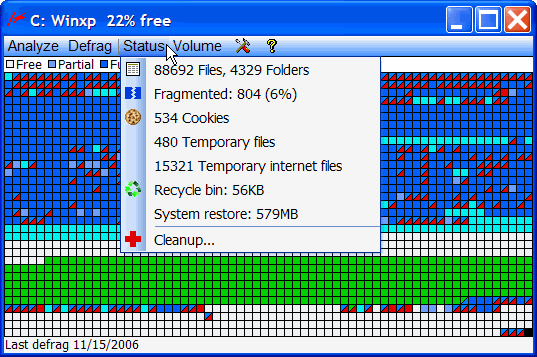
With computers, there are often two opposing schools of thought. You have the shut-downers and leave-runningers. (Shut it down: Save electricity, be more carbon neutral, less vulnerable to hackers, less wear and tear. Leave it running: Saves time, less wear and tear due to startups, allows utilities to run when machine is not in use.) Then you have the defraggers and the leave-it-alone-that's-a-waste-of-timers. Some techs say that hard drives run so fast today that fragmented files don't make any appreciable difference in file-fetching times. But then others say that a severely fragmented drive can indeed slow things down. Who's right? I have no idea. So I'm going to test it out in an entirely unscientific, subjective way. I've dowloaded and run a trial version of Vopt 8.3 for Windows, and over the next few hours I'll see if I notice any improvement in my PCs performance. Hey, things seem to be running faster! Try it for yourself here.
